For many patients undergoing rehabilitation, getting back behind the wheel is a symbol of independence. Getting back behind the wheel does not happen overnight; it is the result of a long process of collaboration between the patient and healthcare staff to ensure a safe return to driving. This process raises practical questions for healthcare professionals: how should the patient’s abilities be assessed? How can such a significant decision be made objectively? Rehab Evolution, the first driving simulator designed specifically for rehabilitation, provides an answer to each of these questions.

A tool designed for healthcare professionals and patients

Rehab Evolution is currently used in over 130 rehabilitation centres across France. It forms part of the care pathway for patients returning to driving following an accident, a stroke or any other event that has affected their abilities. Occupational therapists, physiotherapists and neurologists utilise it at various stages of treatment: 

  • initial capacity assessment,
  • progressive training,
  • preparation for resumption.

The assessments available on the simulator have been developed with and for doctors. They are not a substitute for a medical decision, but they inform and support it. When the results are favourable, the simulator helps ensure a smooth return to driving. When they are not, it often helps to identify the adjustments needed to enable a return to driving, or to guide the patient towards a clear-eyed acceptance of the need to stop driving for their own safety and that of others.

Assess, train, objectify

Rehab Evolution measures what the clinical eye alone cannot quantify. Eye tracking, developed using Tobii technology, is one of its key exclusive features. It enables precise measurement of the patient’s visual abilities, analytical and decision-making skills, as well as the risk of inattention. Alongside eye tracking, the simulator analyses reaction times using dedicated graphs, as well as braking quality and distances.

Each session contributes to an individual patient record that stores the training sessions and recorded videos. The replay function allows users to revisit a specific sequence, from inside or outside the vehicle, to analyse a reaction to an unexpected event or to replay an exercise. The patient can thus be exposed to stressful and emergency situations in a controlled environment, and their behaviour observed without any risk to themselves or other road users.
A device now recognised as a medical device

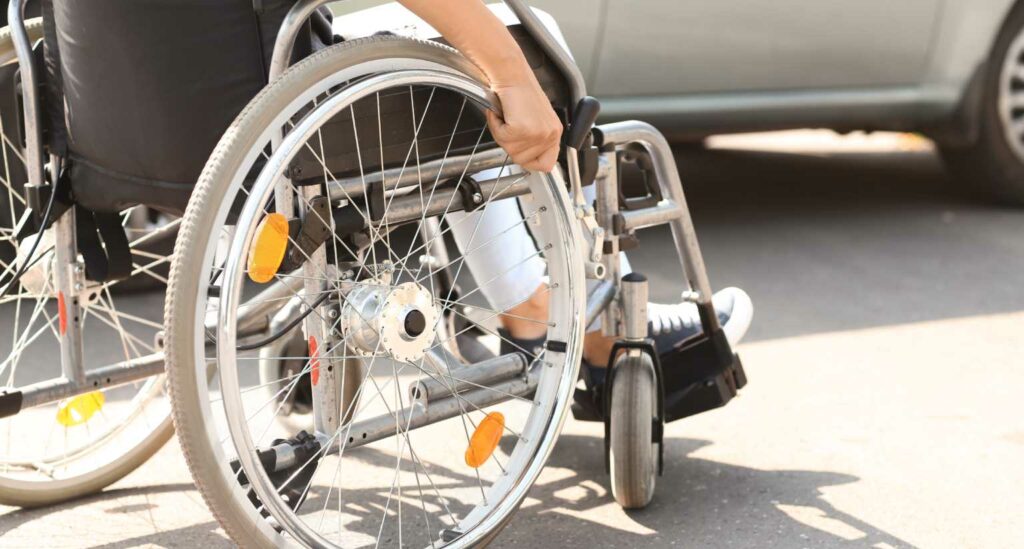
In addition to the software, the Rehab Evolution incorporates hardware adaptations designed to cater for a wide range of situations: a reversible push/pull control, a steering wheel ring, a left-hand accelerator pedal, and even a wheelchair version that allows a paraplegic or quadriplegic patient to be seated in under two minutes without the need for a transfer.

This technical achievement has been recognised on several occasions. The Rehab Evolution won the Road Safety Innovation Award in 2022 and the “Pros de l’Auto Auto Moto” Award in 2023. In March 2026, it became the world’s first driving simulator to receive the CE Medical Device marking in accordance with European Regulation MDR 2017/745, a milestone that cements its place in the world of medical devices.